


The Evolving World of Clinical Nutrition: Reflections from ESPEN 2026
Author: Yelda Kocaman
Afilliation: Division of Geriatrics, Etlik City Hospital, Ankara, Türkiye
I attended the 48th ESPEN Congress on Clinical Nutrition and Metabolism in Berlin as a member of the ECGI Reporter Group, together with Arzu Okyar Baş. Held under the motto “Nutrition is the Mission,” the congress highlighted the pivotal role of optimal nutrition in preventing disease, improving outcomes for patients with acute and chronic conditions, and safeguarding planetary health through sustainable food systems.
One of the key sessions I attended at ESPEN 2026 was “GLIM 10 years after,” which reviewed the GLIM pathway from international consensus to its 2025 update and the new ICD-11 code 5B72, “Undernutrition in adults,” accepted in October 2025 and active from 2027. Inspired by GLIM, the ICD-11 definition distinguishes disease-related undernutrition with moderate-to-severe inflammation, disease-related undernutrition with non-discernible inflammation, and starvation.
Discussions also covered low muscle mass, including efforts towards global operationalisation and the lack of consensus on body-size adjustment; the transition from screening for malnutrition to screening for risk of malnutrition based on defined risk categories; updated guidance on the amount, duration and timeframe of reduced food intake and assimilation; and GLIM in obesity, particularly the limitations of low BMI and the role of low muscle mass.
The Berlin Consensus presented the Global Leadership Initiative on Indications to Nutritional Therapy and Support (GLINTS). Undernutrition and high risk of malnutrition/undernutrition were identified as indications for nutritional therapy/support. Reduced food intake and inability to eat for more than five days were also identified as indications. Enteral tube feeding is indicated when oral nutritional intake provides less than 50% of estimated energy and nutrient requirements and no significant improvement in intake is expected, while parenteral nutrition is indicated in patients with intestinal failure.
My participation in ESPEN 2026 also included Life-Long Learning (LLL) courses, as I continue to accumulate the required credits towards the ESPEN Diploma in Clinical Nutrition and Metabolism. I also successfully completed the Teach the Teachers for Life-Long Learning (T-LLL) course in Berlin, becoming an ESPEN-certified teacher of the LLL programme in Clinical Nutrition and Metabolism.
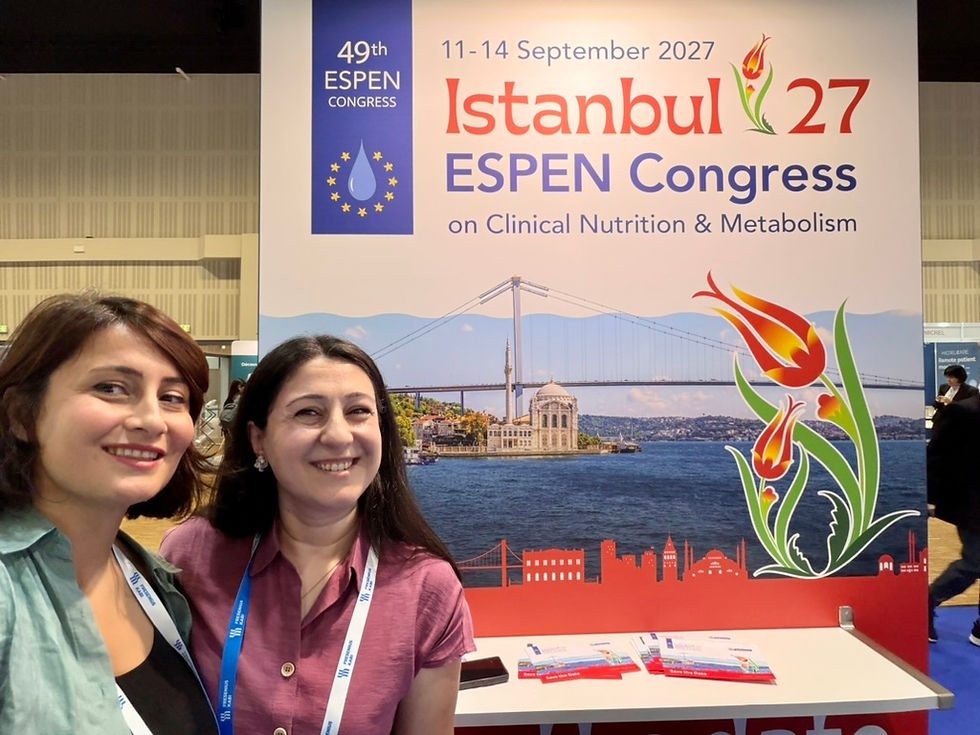
The 49th ESPEN Congress will take place in Istanbul on 11–14 September 2027. I warmly invite my EuGMS colleagues to join us for ESPEN 2027.
References:
Global Leadership Initiative on Indications to Nutritional Therapy and Support (GLINTS): A consensus report from the global clinical nutrition community. Clin Nutr. 2026 Oct;65:106768.


Comments