


Ageing Is Not the Challenge—How We Respond to It Is
A conversation with Professor Mirko Petrovic (Part 1)
Interviewers: Sirin Zelal Sahin Tirnova & Ezgi Pinar (ECGI Blog co-leaders)
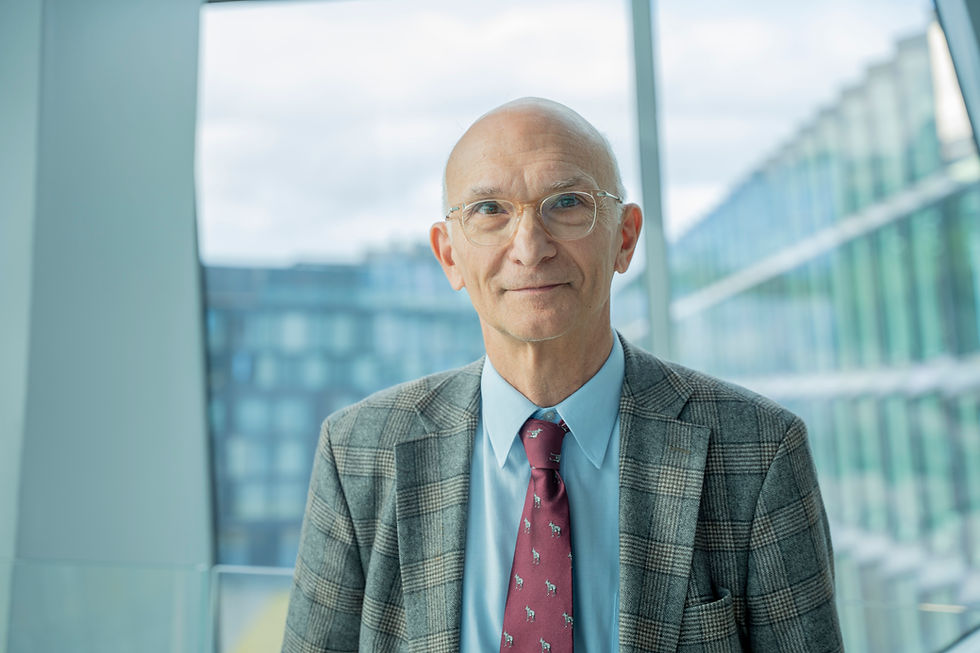
Interviewee: Prof. Mirko Petrovic
In this special ECGI Blog interview, we had the privilege of speaking with Professor Mirko Petrovic, one of the most influential figures in European geriatric medicine. Over decades of clinical, academic, and leadership experience, he has helped shape the way geriatric care, education, and research are developed across Europe.
This is the first part of a three-part conversation with Professor Petrovic. In the coming weeks, we will continue our discussion on frailty, polypharmacy, research, and career development in geriatric medicine.
In this first instalment, Professor Petrovic reflects on the unmet needs in geriatrics, the impact of demographic change, and how healthcare systems can better respond to an ageing population.
Stay tuned for the next parts!
About Professor Mirko Petrovic:
Professor Mirko Petrovic is Emeritus Professor of Geriatric Medicine and Clinical Pharmacology at Ghent University and Ghent University Hospital, Belgium, and currently serves as Immediate Past President of the European Geriatric Medicine Society (EuGMS). A highly respected leader in European geriatrics, he has made major contributions to research and education in frailty, polypharmacy, geriatric pharmacotherapy, falls prevention, and integrated care for older adults. Through his scientific work, mentorship, and leadership roles, Professor Petrovic has helped shape geriatric medicine practice and training across Europe.
INTERVIEW
ECGI Blog: Looking ahead, where do you see the greatest unmet needs in geriatric medicine in Europe over the next decade?
Professor Petrovic: I believe one of the greatest unmet needs in European geriatrics is adapting healthcare systems to the demographic reality of ageing populations. We often talk about major global challenges such as climate change, yet demographic ageing may have an equally profound impact on healthcare systems, social care, and public finances across Europe. Europe’s population is getting older, yet many healthcare systems remain largely organized around acute illnesses and single-disease care models. In contrast, older adults frequently present with multimorbidity, frailty, cognitive impairment, functional decline, and increasing care dependency. These realities require a different approach to care.
Too often, healthcare systems still focus primarily on curing disease rather than preventing decline, maintaining function, and supporting healthy ageing. In many settings, concepts such as frailty and integrated care pathways are not yet fully understood or implemented outside geriatric medicine. Addressing this gap will be essential in the coming years. We need better transitions between hospital, rehabilitation, primary care, and long-term care settings. Fragmentation remains a major problem.
Another key challenge is workforce development. Europe needs more healthcare professionals trained in geriatric principles—not only geriatricians themselves, but also nurses, pharmacists, emergency physicians, surgeons, and primary care clinicians with expertise in caring for older adults. Preparing the workforce for demographic change must become a shared responsibility across disciplines.
Research inclusion is another unmet need. Older adults with multimorbidity remain underrepresented in clinical trials, which limits the applicability of evidence. We need research designs that better reflect real-world older populations.
Finally, digital medicine and artificial intelligence will likely transform care, but we must ensure these innovations reduce rather than widen inequalities for older adults. Young geriatricians should become familiar with these developments and actively engage with them, as they are likely to shape the future of our specialty in ways we are only beginning to understand.
ECGI Blog: In your experience, what are the most effective ways to improve research collaboration between European institutions in geriatrics? Are there structural or cultural barriers that still need to be addressed?
Professor Petrovic: I believe that successful research collaboration starts with people rather than projects. European geriatrics has benefited enormously from collaborative networks, and many of the strongest advances in the field have come from multicenter cooperation. Building strong professional networks and maintaining long-term relationships are among the most effective ways to foster such collaboration, which often begins with shared clinical questions rather than administrative structures.
Investing in long-term relationships is critical. Regular interaction through working groups, trainee networks, joint supervision, and multicenter registries creates trust, which is ultimately what sustains collaboration.
Looking back at my own career, one of the most valuable experiences was participating in the European Academy of Medicine of Ageing. It brought together colleagues from different countries who shared similar interests and ambitions. Many of the collaborations that later led to joint research projects and publications began through those personal connections.
However, there are still structural barriers. Funding mechanisms are often fragmented, ethics and regulatory processes differ between countries, and protected research time remains limited in many institutions. Data-sharing regulations, while important, can also complicate multinational projects. Another challenge is the increasing administrative burden associated with research. Securing funding, meeting regulatory requirements, and managing large collaborative projects often consume time that could otherwise be devoted to scientific work.
There are cultural barriers as well. Some systems remain relatively hierarchical, which can make it harder for younger investigators to participate fully. Language differences and unequal access to research infrastructure across Europe also contribute to disparities.
I think one priority should be ensuring that collaboration is genuinely inclusive, involving not only major academic centers but also smaller institutions and emerging research groups. European geriatrics will benefit most when collaboration is open, supportive, and accessible to everyone who is willing to participate.


A very insightful and forward-looking perspective. It clearly highlights how essential it is to adapt healthcare systems to ageing populations in a more holistic and person-centred way. The emphasis on interdisciplinary training and inclusive research is especially important. Work in this direction is both timely and encouraging.
Many thanks to everyone involved in preparing and sharing this valuable interview. Best Regards Serkan Duru