


Building a Career in Geriatrics: Advice for the Next Generation
A conversation with Professor Mirko Petrovic (Part 3)
Interviewers: Sirin Zelal Sahin Tirnova & Ezgi Pinar (ECGI Blog co-leaders)
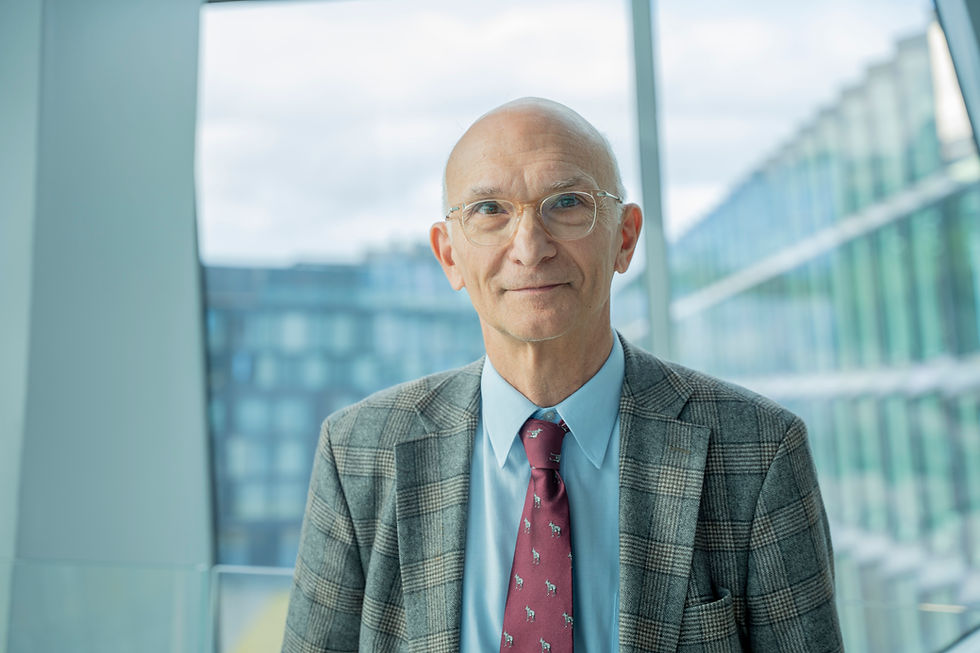
Interviewee: Prof. Mirko Petrovic
We’ve reached the final part of our conversation with Professor Mirko Petrovic. This time, we move beyond clinical practice to talk about something every early-career and academic geriatrician thinks about at some point: how to build a meaningful career, find the right research questions, and grow within the international geriatrics community. Enjoy the conversation!
ECGI Blog: Many early-career geriatricians today find themselves taking on leadership roles in scientific groups or initiatives before feeling fully confident or well-connected. What advice would you give them? Also, how did you identify the research questions that became the defining focus of your career? And what would you say to a young geriatrician who is still searching for their own research direction?
Professor Petrovic: Many early-career clinicians underestimate how common it is to feel unprepared for leadership roles. In reality, most people grow into these responsibilities gradually. My advice would be: do not wait until you feel completely ready before becoming involved and remain both curious and critical from the very beginning of your career. Scientific societies and collaborative networks are learned through participation, not beforehand.
Early on, it is natural to follow existing evidence, established rules, and the guidance of senior colleagues. However, it is equally important not to follow things blindly. Young professionals should develop the habit of questioning, reflecting, and discussing what they see and hear. If something does not seem entirely clear, they should explore the literature, seek evidence, and engage in meaningful conversations with colleagues and mentors.
Another important step is to think early about one’s own ambitions. Some people may wish to focus primarily on clinical practice, while others may want to combine clinical work with research, teaching, or a broader academic career. There is no single correct path, but it is important to make conscious choices and actively shape one’s professional development rather than simply following the direction suggested by others.
I also believe that young professionals should start thinking about leadership from an early stage. Importantly, leadership in geriatrics is often exercised through influence rather than authority. The ability to build consensus across disciplines may be more valuable than formal leadership positions. Many people assume that leadership is mainly about knowledge, and of course, a solid theoretical foundation is essential. But it is also important to remember that leadership is not about knowing everything. It is about being reliable, collaborative, and willing to contribute consistently over time. Building relationships across Europe is one of the greatest strengths of geriatric medicine, and young colleagues should take advantage of opportunities to join working groups, multicenter studies, and congress activities early in their careers.
Regarding research questions, the most meaningful ones often come directly from clinical frustration. In my own case, I became interested in prescribing because I repeatedly saw older patients harmed not by a single medication, but by the cumulative complexity of treatment. Those daily clinical observations eventually evolved into research questions.
For young geriatricians still searching for a direction, I would say: stay close to clinical practice and pay attention to the problems that repeatedly make you think, “there must be a better way.” Your research focus often emerges from the intersection of curiosity, unmet patient needs, and long-term persistence rather than from a single moment of inspiration.
ECGI Blog: For mid-career academic geriatricians aiming to build an international profile, what strategies have you found most effective for developing impactful research collaborations and leadership roles within European geriatric networks?
Professor Petrovic: For mid-career academic geriatricians, visibility comes less from self-promotion and more from sustained contribution to collaborative work. International profiles are usually built through reliability, scientific quality, and long-term engagement.
There is often pressure to publish, but I do not think the goal should simply be to increase the number of publications. What matters most is producing high-quality research that is relevant to clinical practice and maintaining a consistent, long-term commitment to the field. Over time, people come to recognize colleagues who are reliable, collaborative, and willing to share their expertise.
One effective strategy is to become known for a specific area of expertise. It is easier to build recognition when colleagues associate you with a particular field—frailty, pharmacology, dementia, perioperative geriatrics, or another defined area.
Participating actively in European societies and working groups is also extremely valuable. Often the most important collaborations begin informally through committees, congresses, or multicenter initiatives rather than through formal applications.
Another key point is mentorship in both directions: having senior mentors while also supporting younger colleagues. Strong academic networks are built through generosity and reciprocity. Throughout my career, I have been a strong supporter of mentoring younger colleagues, and during my time as EuGMS President, I actively encouraged the involvement of early-career professionals. Ensuring continuity and maintaining the quality of our field depends on supporting the next generation. For individuals seeking to build an international profile, having a trusted mentor—someone who can provide both professional guidance and scientific expertise—can be invaluable.
I also believe there has been an important cultural shift in academic medicine. Decades ago, many scientific papers were written by a single author, whereas today impactful research is increasingly collaborative and international. The focus should no longer be on individual visibility alone, but on collaborative impact. The most influential work often comes from teams that bring together different perspectives, expertise, and experiences across countries.
Finally, I would encourage colleagues to think broadly about mentorship and professional networks. A mentor does not necessarily need to come from your own institution or even your own country. Sometimes an international colleague can become an important role model, collaborator, and source of guidance. European geriatric networks provide excellent opportunities to build these relationships, and they remain one of the strongest foundations for both leadership development and meaningful research collaboration.


Comments